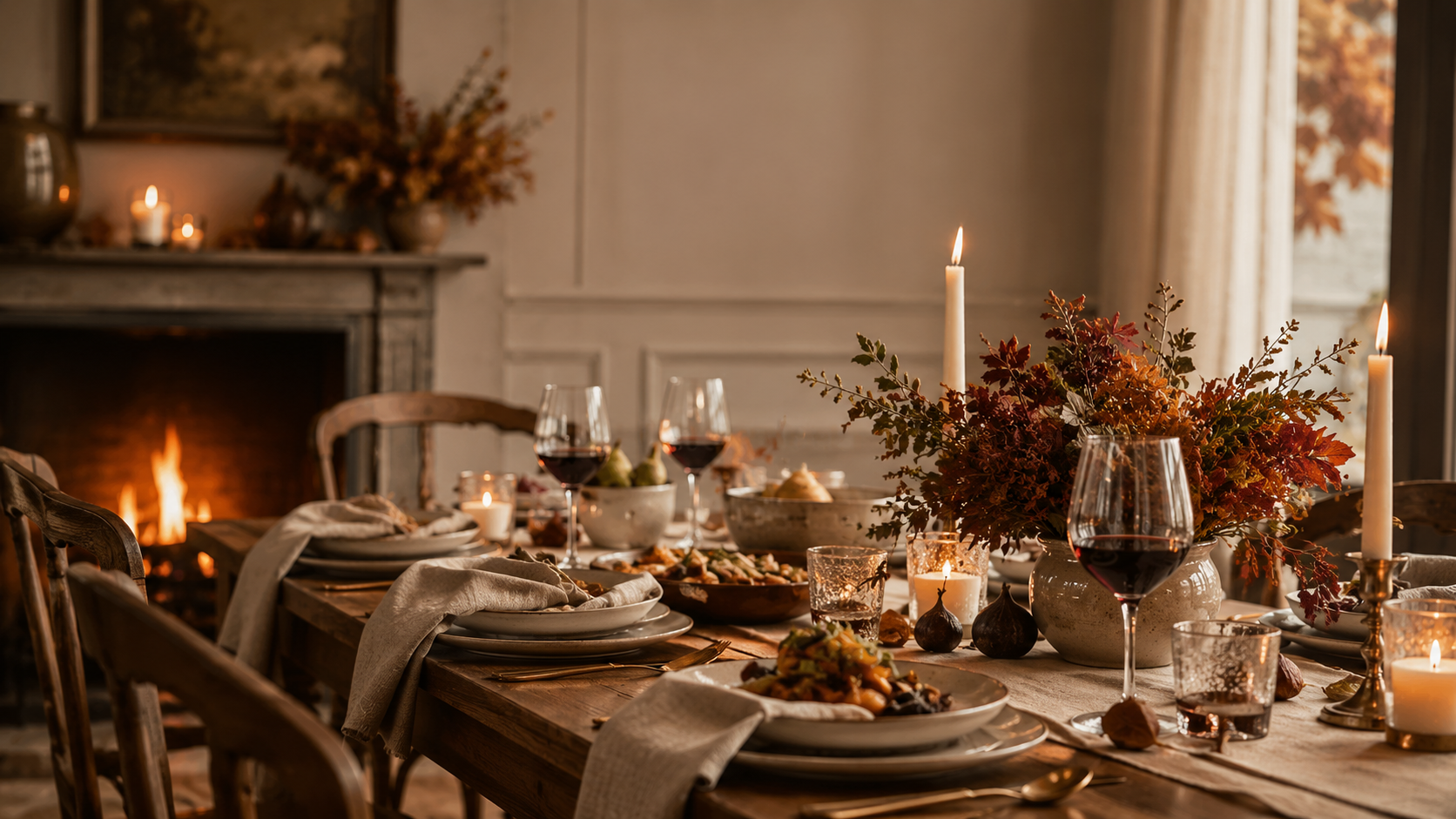

Hosting a fall dinner party is often reduced to recipes, table settings and decor. Those things matter, but they are not what determines whether the evening itself works. Before choosing what to cook or how to style the table, you need to decide what kind of dinner you are hosting, who should be there, when it should happen, how the evening will unfold and what needs to be prepared in advance. That planning layer is easy to skip because it is less visible, but it shapes everything that follows. This guide is about that part: the structure behind a fall dinner party that feels thoughtful, relaxed and easy to host.
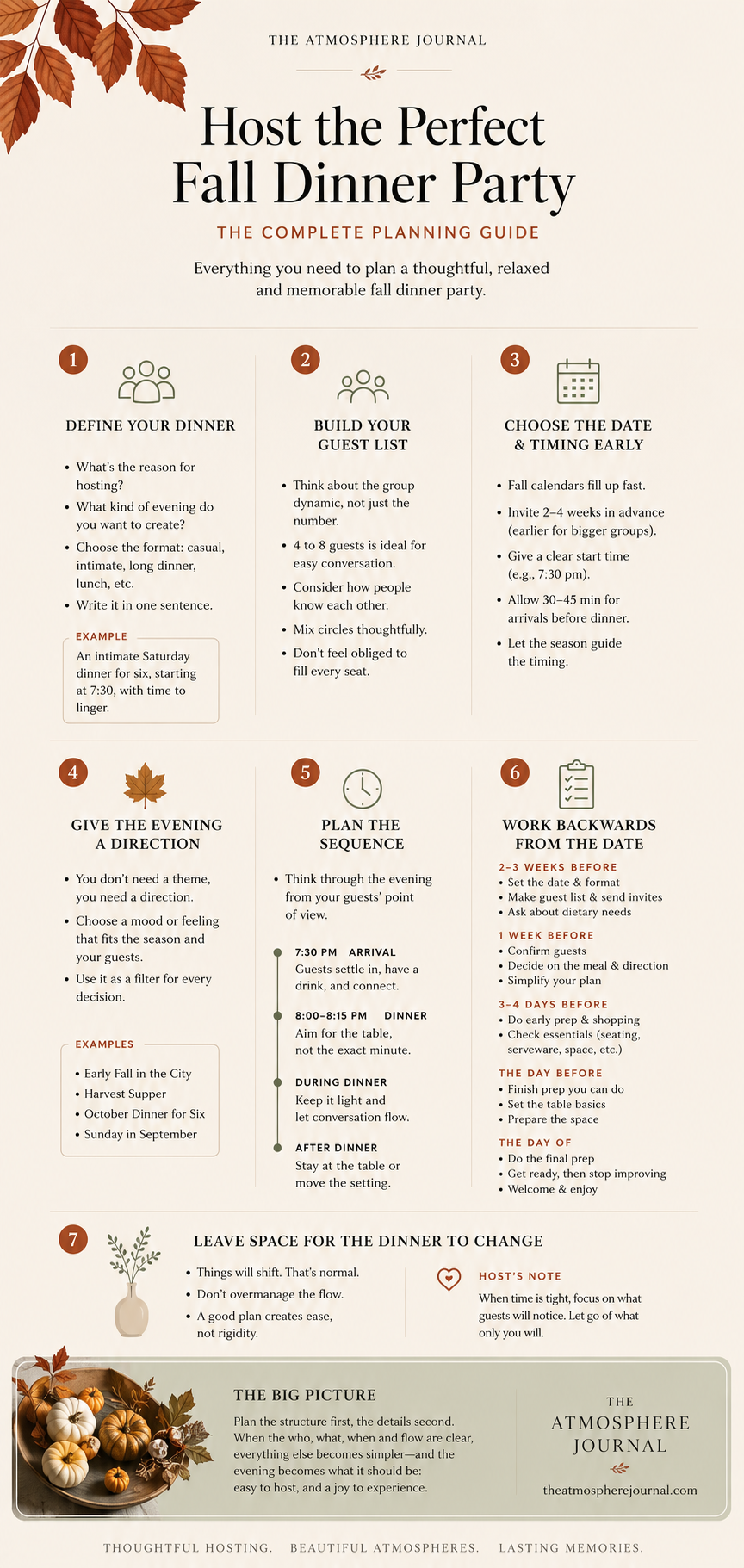
If you have the time to read closely, this guide will take you through the planning decisions that make a fall dinner party work, and help you become a much more confident host in the process. If you’re short on time, we’ve got you too: scroll to the end of the article for a detailed infographic that brings the entire planning process together in one place.
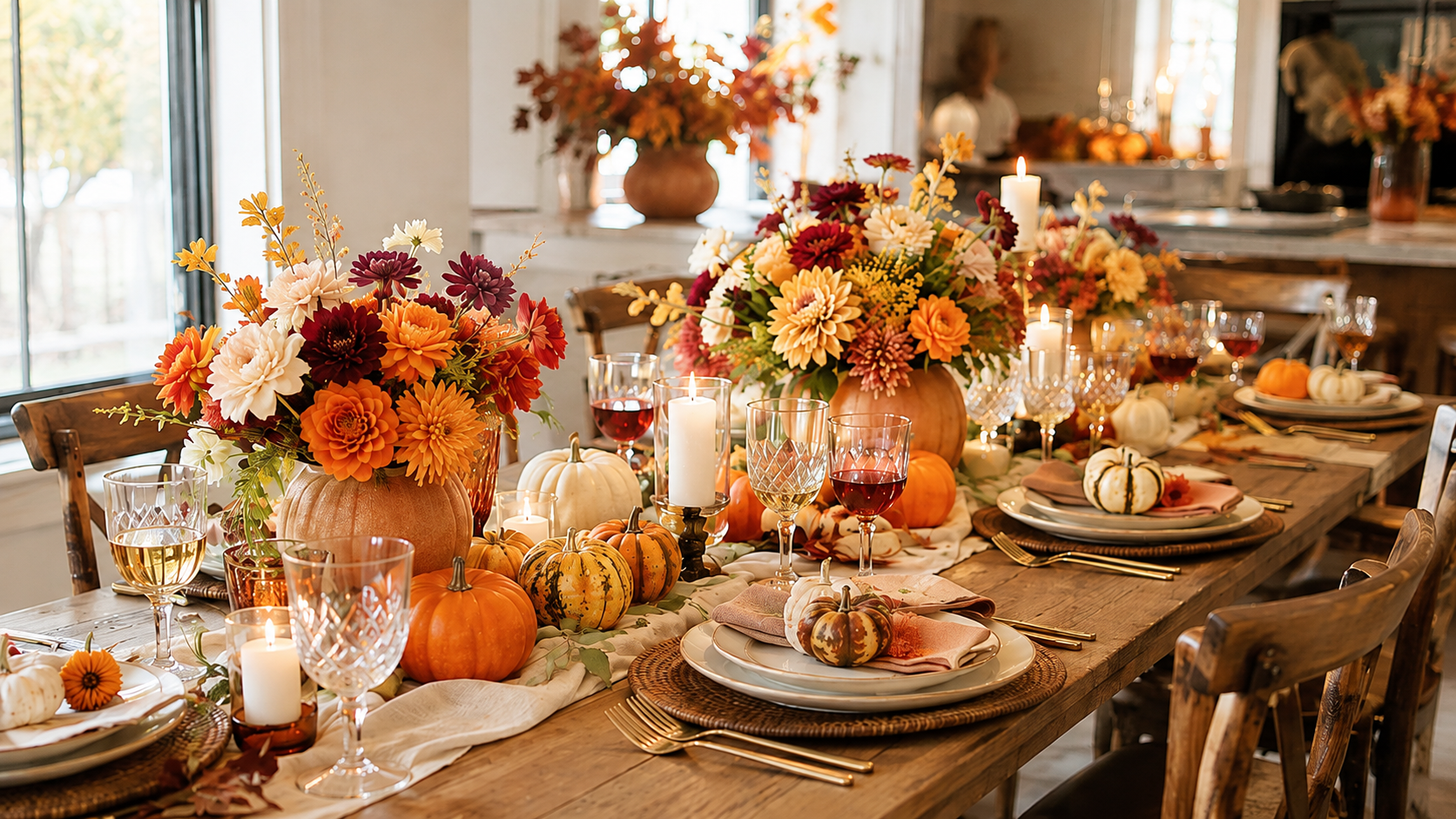
First, Decide What Kind of Dinner You Are Hosting
“Fall dinner party” is a broad description. It could mean six friends coming over after work on a Friday, a longer Saturday dinner for ten, a Sunday lunch, or a small supper for four people who have not properly caught up in months.
Those evenings should not be planned in the same way.
Start with the reason you want to host. Not the menu. Not the look of the table. The reason.
Maybe you want to see friends before the end-of-year rush begins. Maybe you want to introduce people from different parts of your life. Maybe the dinner is simply an excuse to mark the change of season. Maybe you want something small enough that everyone can stay in the same conversation all night.
Once that is clear, decide on the format.
A Friday dinner usually needs to be relatively forgiving; people may be coming straight from work and arriving at slightly different times. A Saturday allows for a longer evening and generally gives the host more preparation time. A Sunday lunch or early dinner has a completely different rhythm again, and can work especially well in early fall when there is still plenty of daylight.
Think about formality too.
A dinner can feel special without being formal. You might want everyone to dress up a little but keep the meal relaxed. You may want a proper sit-down dinner without assigned seating. Or you may prefer a very casual evening where people arrive early, move around and eventually gather at the table.
Try to describe your plan in one sentence.
An intimate Saturday dinner for six, starting at 7:30, with enough time before and after dinner for everyone to linger.
Or:
A relaxed Sunday lunch for eight friends, beginning early and stretching into the afternoon.
That sentence gives you something surprisingly useful: a brief. It becomes the standard against which you can judge everything else you are tempted to add.
Build the Guest List Around the Group, Not the Number
Most people build a guest list one invitation at a time. They think of someone they would like to see, add another person, remember a couple they have not invited over recently, and keep going until the table is full.
It is worth doing the opposite.
Think first about the group you are trying to create.
For a dinner where you want everyone involved in the same conversation, four to eight guests is usually an easy range. Once the group gets larger, the evening changes. Conversations separate, people move around more, and the host has more personalities and logistics to manage.
That is not necessarily a problem. It is simply a different kind of dinner.
Pay attention to how people know one another. Bringing different social circles together can make for a much more interesting evening, provided there is some connective tissue between them. Shared interests help. Similar temperaments help. So does simply knowing that two people are likely to find one another funny.
What is harder is inviting one person who knows nobody into a room where everyone else has years of shared history. If you are mixing groups, it can be kinder to bring in two or three people who are new to the wider circle rather than leaving one guest in the position of having to break into it alone.
Couples can shape the dynamic as well. A dinner made entirely of couples often falls naturally into pairs, while mixing couples and individual guests tends to open the group up.
And do not feel obliged to use every chair you own.
If your table technically fits ten but six or eight would give everyone more room and make conversation easier, the smaller number may produce the better evening.
Capacity is a practical limit. It does not need to become a target.
Choose the Date and Timing Earlier Than Feels Necessary
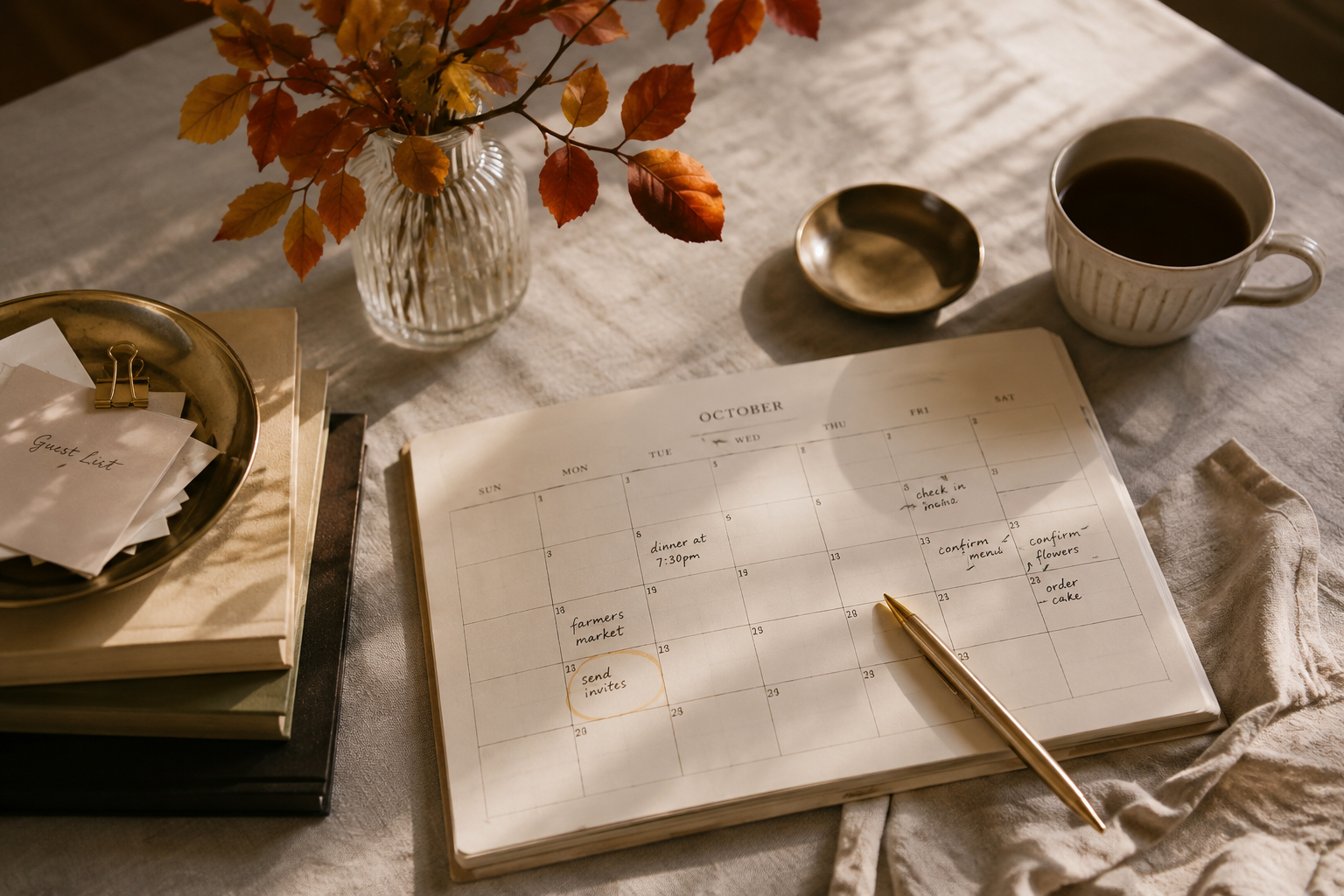
Fall fills up quickly.
September brings the return to normal routines after summer. October tends to collect travel, weddings, school holidays and Halloween plans. By November, December calendars are already influencing what people say yes to.
If there are particular people you want at the table, give them enough notice.
For a casual dinner, two to three weeks is usually comfortable. If the group is larger, the weekend matters, or several guests tend to travel, three to four weeks is safer.
Then think seriously about the starting time.
An invitation for 8:00 p.m. should not mean that you intend to serve dinner at 8:02. Guests need a little time to arrive, take off their coats, settle in and join the group before the evening moves forward.
Around thirty to forty-five minutes between the invitation time and sitting down for dinner usually gives you enough breathing room without making people wonder when they are going to eat.
The host’s schedule deserves equal consideration.
If you work until six on Friday, a complicated dinner beginning at seven may look reasonable on paper and feel terrible in practice. If Saturday gives you four extra hours and a much calmer afternoon, that is part of the planning too.
The season changes what timing feels natural.
Early September can still support an outdoor first part of the evening or a Sunday lunch that takes advantage of daylight. By late October, darkness arrives earlier and temperatures can drop quickly. November naturally lends itself to an earlier, more contained evening indoors.
That is why “fall dinner party” is not one fixed format. The season shifts over three months, and the plan should shift with it.
Give the Evening a Direction Without Giving It a Theme
You do not need a theme.
Unless you are hosting a specific celebration, themes often create more decisions than they solve.
A creative direction is more useful.
It is simply a clear idea of what kind of evening you want to create. It should be broad enough to leave you room, but specific enough to stop you from saving fifty unrelated ideas and trying to combine them all.
For example:
Early Fall in the City
A slightly dressed-up September dinner. Seasonal, but not overtly autumnal.
Harvest Supper
A generous, grounded dinner built around the feeling of the season and what is available now.
October Dinner for Six
Small, intimate and suited to a later evening indoors.
Sunday in September
A slower daytime gathering that feels halfway between lunch and dinner.
These are not themes to decorate around. They are filters.
If you are planning an October dinner for six and suddenly find yourself considering an idea that belongs at a large outdoor harvest party, it is easier to recognize that it may be beautiful but wrong for this particular evening.
That distinction matters because the easiest way to overcomplicate a dinner party is to confuse inspiration with instruction.
Let the Season Influence the Plan, Not Dictate It
Fall does not need to be announced in every detail.
The season already changes the way people gather. The evenings get shorter. More dinners move indoors. People tend to want slower meals and longer conversations after summer’s looser schedules.
Use those changes rather than exaggerating them.
Early fall still has some of summer’s openness. Windows may stay open. People may arrive in daylight. The evening can feel lighter.
October usually feels more distinctly autumnal and can support a later, more intimate dinner.
By November, the social calendar is beginning to lean toward the holidays, which means a dinner that feels deliberately non-festive can actually be refreshing.
Instead of asking, “How do I make this look like fall?” ask, “What kind of gathering makes sense at this point in the season?”
It is a much better planning question.
Plan the Sequence Before the Evening Starts
A dinner party does not need a minute-by-minute itinerary, but it does benefit from a basic order.
Think through the evening from the guest’s point of view.
What happens when they arrive?
When do you expect everyone to sit down?
What happens after dinner?
Where does the evening end?
A straightforward Saturday dinner might look like this:
7:30 p.m. — Arrival
Guests come in, settle and have time to speak before anyone is moved to the table.
8:00–8:15 p.m. — Dinner begins
You have a target rather than an exact deadline.
During dinner — Keep the structure light
Once everyone is seated, there is very little reason to overmanage the evening. Dinner itself is the activity.
After dinner — Decide whether the setting changes
Maybe everyone stays at the table. Maybe you prefer to move elsewhere. Either is fine; knowing what you intend to do simply means the next part of the evening does not need to be invented on the spot.
The purpose of thinking through these transitions is not to control your guests.
It is to avoid having to make hosting decisions while you are trying to enjoy the evening with them.
If conversation is going well, let it run.
If dinner begins twenty minutes later than expected because everyone is talking, that is usually not a problem worth fixing.
A plan should give the evening shape without becoming something you feel obliged to enforce.
Work Backwards From the Dinner Date
A relaxed host is usually the result of decisions made several days earlier.
The easiest way to avoid doing everything at once is to work backwards.
Two to Three Weeks Before
Set the date and decide on the format.
Make the guest list and send invitations.
Ask about dietary restrictions now, rather than treating them as a last-minute food problem.
You do not need every detail settled yet. The important thing is getting the people and the date in place.
One Week Before
Confirm who is coming.
Decide on the creative direction and the broad shape of the meal.
This is also the right time to look at what you are planning and remove anything that has become unnecessarily complicated.
A useful question is: Am I adding this because the evening needs it, or because I saw it somewhere and liked it?
Those are not the same thing.
Three to Four Days Before
Handle anything that can be handled early.
Complete the main shopping that will keep. Confirm any orders. Check that you have enough chairs and serving pieces. Think about where guests will leave coats and bags.
Walk through the evening once in your head.
Not aesthetically. Practically.
Where will people go when they arrive? Is the room comfortable for the number of guests? Is there enough space at the table? Is there anything you are assuming you own but have not actually checked?
This is the point where small problems are still easy to fix.
The Day Before
Finish as much preparation as you reasonably can.
Focus on the parts of the home guests will actually use. Nobody coming to dinner needs the inside of your bedroom wardrobe to be organized.
Put aside anything you will need for serving so you are not looking for it later.
If something can safely be completed now rather than tomorrow, do it now.
The aim is not to make the day of the dinner empty. It is to stop it from becoming a race.
The Day Of
Protect the final few hours.
Finish the necessary preparation first. Leave enough time to get ready yourself. Avoid adding new ideas to the plan because you suddenly have access to the internet and an hour left.
Then choose a stopping point.
Around thirty minutes before the first guest is due, stop improving the dinner.
Something will always be capable of being adjusted, wiped, rearranged or added.
It probably does not need to be.
HOST’S NOTE
When time starts getting tight, divide the remaining tasks into two groups: things guests will notice and things only you will notice. Drop the second group first.
Leave Enough Space for the Dinner to Change
The last part of planning is knowing when to stop following the plan.
You may expect everyone to move after dinner and find that nobody wants to leave the table.
You may think a group will arrive gradually and discover that everyone turns up at once.
Dinner may begin later than expected. One guest may cancel that afternoon. A conversation may take over the entire evening.
None of this means the planning failed.
The purpose of planning is to remove friction, not spontaneity.
Once the important decisions are made—the guest list, the format, the timing, the sequence, the practical preparation—you can afford to be flexible about the rest.
That is a much more useful definition of a well-planned dinner than an evening that runs exactly on schedule.
Plan the Evening Before You Plan the Details
A fall dinner party becomes much easier once you stop treating the visible parts as the starting point. Before recipes, decor or any of the smaller decisions, work out what kind of evening you want to host, who belongs at it, when it should happen and how you want it to move.
Most of the stress people associate with hosting comes from making those decisions too late.
Make them early instead. Give the dinner enough structure that nothing important is being figured out after guests arrive, but leave enough flexibility for the evening to develop naturally.
That is the planning worth getting right.
Fall Dinner Party Planning Checklist
Short on time? Save this complete planning checklist for your next fall dinner party.